
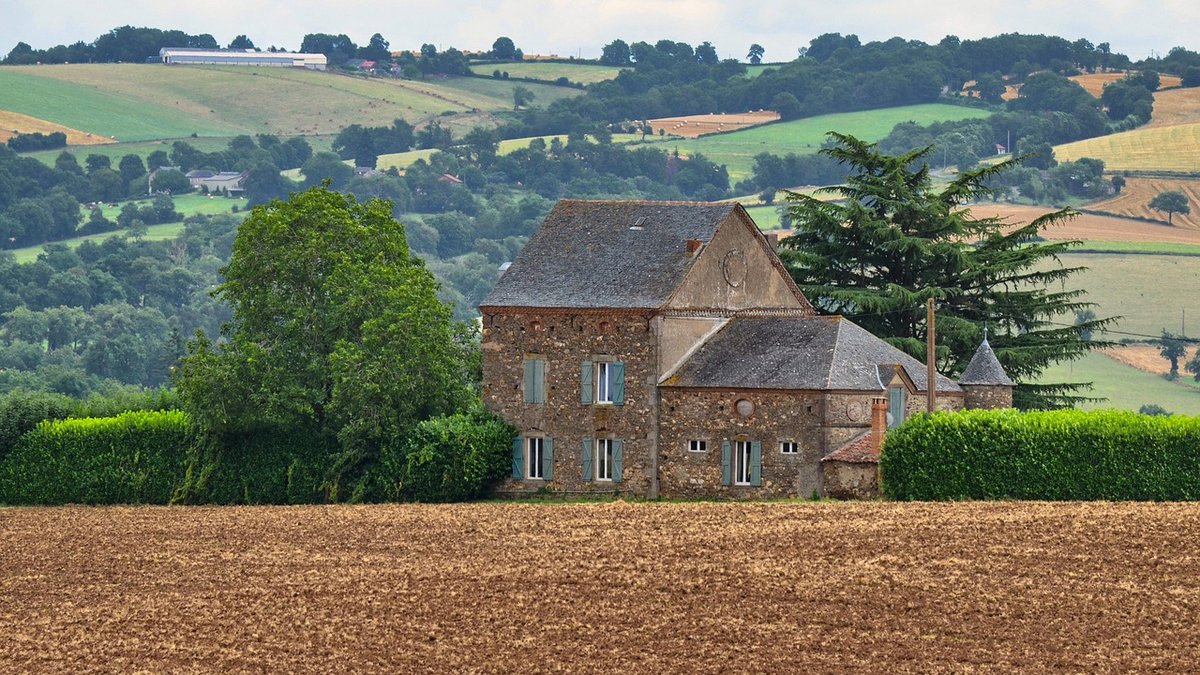
The folly is one of Britain's more charming architectural indulgences: a building erected chiefly for decoration, with no practical function to speak of. A castle that never housed a garrison, a tower with no bell, a ruin that was never whole in the first place. The fashion peaked in the eighteenth and early nineteenth centuries, when landed families remodelled their parks in the landscape style and needed something picturesque to punctuate the view.
Follies came in several flavours. The eyecatcher stood on a ridge to be admired from the house, perhaps a mile or two away. The conceit was a functional building dressed up as something else, such as a dovecote in the guise of a classical temple, or a water tower pretending to be a castle keep. And the sham ruin was built deliberately broken, its crumbling arches designed by an architect with no intention of ever finishing them. Understanding which is which is half the pleasure of visiting.
Broadway Tower on the Worcestershire escarpment is the classic example: a Gothic confection raised so that the gentry at a nearby seat could admire it through the trees, and so that the tower's occupants could look back. Many such towers served a secondary purpose as a viewing platform, a summerhouse or a place to take tea, which is why so many of them have a small room at the top rather than a bell chamber.
Coastal follies bring their own drama. Clavell Tower in Dorset, a Tuscan-style cylinder perched precariously above Kimmeridge Bay, was taken apart stone by stone and moved back from the crumbling cliff in 2008, a reminder that these structures are as much heritage as they are whimsy. Elsewhere, slender brick towers cling to hillsides in Shropshire, Suffolk and Northumberland, often visible from public footpaths long before they appear on the map.
The sham ruin is the strangest of the lot. Gentry who could not afford a genuine medieval abbey in the family simply commissioned one in a suitably decayed condition, complete with tumbled masonry and ivy. The Romantic taste for melancholy made a broken arch far more fashionable than a tidy new one, and the ruin became a place to stroll at dusk and contemplate mortality in comfort.
The related craze for the ornamental hermit is well documented, if much exaggerated. Some estates built a hermitage in the grounds and engaged a man to live there in rustic costume, sometimes for a fixed term of years, on the understanding that he would not wash, cut his hair or speak to visitors. Very few of these arrangements lasted long, but the hermitage buildings survive, usually as a small stone hut or cave with a rustic seat.
Where the eighteenth century gave us towers, it also gave us interiors crusted with shell, flint, coral and minerals. Shell houses were the preserve of the wealthy amateur, who decorated walls and ceilings with patterns of mussel, oyster and whelk, sometimes arranged in heraldic or geometric designs. A handful remain open to the public, often on summer weekends and usually for a modest fee.
The same impulse produced the grotto, a cave-like room of tufa, fossils and glass that offered damp shade on a hot day. In the last century, grottoes were also built in suburban gardens, and you will still find them behind privet hedges in towns across England. The celebrated shell grotto in Kent remains one of the strangest interiors in the country, its origins still disputed.
A word of warning: shell work is fragile. Do not touch the walls, however tempting the surface looks. Skin oils, condensation from breath and the pressure of a fingertip all take their toll.
Most follies sit on private land, but a great many can be seen, and sometimes reached, from public rights of way. The trick is knowing where to look.
The appeal of these buildings has not faded. They are proof that the British landscape has long been arranged with a wink, and that a tower built for no reason at all can still earn its keep as a landmark, a view and a very good excuse for a walk.

Hi, my name is Anthony kuber. I am artist and fashion designer.
I love to travel and writing blogging.
Your email address will not be published. Required fields are marked *
Software Developer & Writer
Hey, I'm Diva, a developer and writer blending code and creativity. I'm driven by a deep curiosity and a relentless pursuit of excellence. Join me as I craft digital solutions and captivating stories.


