
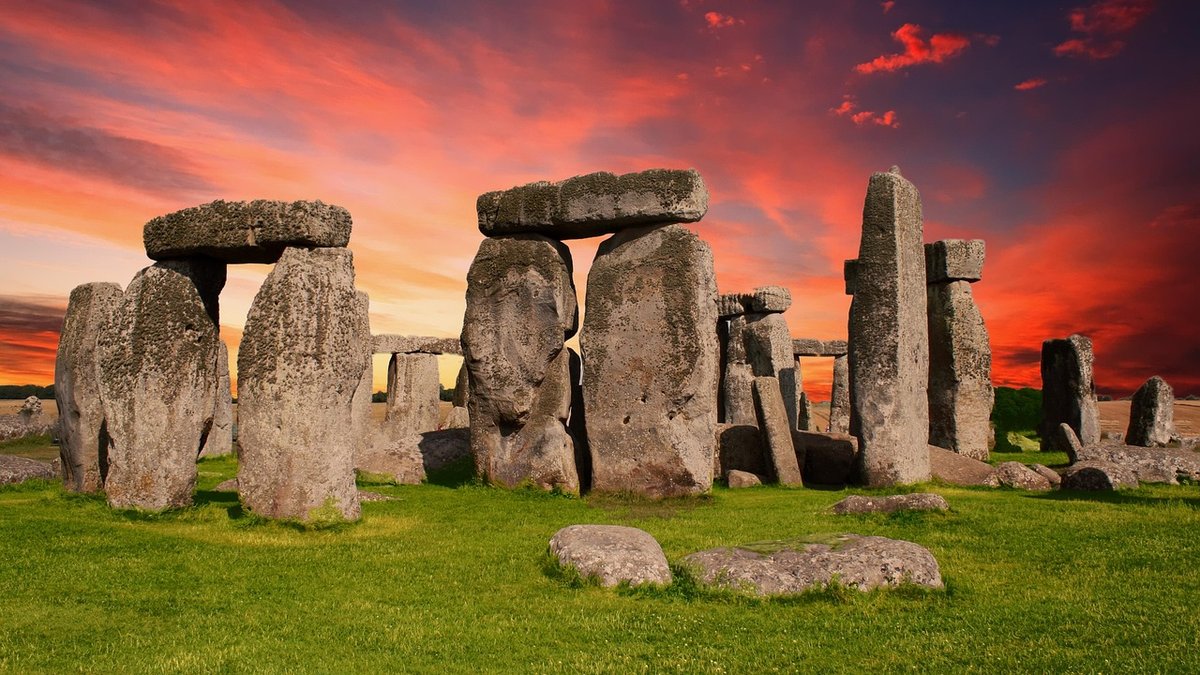
There are more prehistoric standing stones in these islands than almost anywhere else in Europe: roughly 1,300 stone circles across Britain and Ireland, plus thousands of single monoliths, stone rows, avenues and chambered tombs. Most were raised between about 3,000 and 1,500 BC by farming communities who had no written word and left us nothing but the stones themselves.
The difficulty for the curious visitor is that "standing stone" gets used as a catch-all for half a dozen quite different things. Learn to tell them apart and a walk in the hills becomes a conversation rather than a glance.
Once you know the categories, the details start to speak. Look at the stone itself: is it local? Most circles are built from rock within a few hundred metres, which tells you the builders were practical rather than romantic about transport. Look at the ground: hummocks, a low bank, a shallow ditch, a ring of smaller kerb stones, or patches of bare earth where hundreds of boots have worn the turf away.
Look for cup-and-ring marks — shallow carved hollows, sometimes ringed, on the flat faces of stones in northern England and Scotland. Never touch them; skin oils and grit do real damage to prehistoric carving. Also check the alignment, but resist over-claiming. A handful of sites have clear solar or lunar orientations, such as the midwinter sunset at Newgrange or the lunar standstill watched from the stones at Callanish. Most do not, and the ones that do were probably noticed by people who had watched the sky for generations rather than by engineers with a plan.
Nearly every significant monument in Britain is a scheduled ancient monument, protected by law. That protection exists because these stones are fragile in ways that are not obvious. Lichen communities on the surface can be centuries old. A single person climbing a stone can loosen it; a hundred doing it will topple it. Fire scorches the rock and leaves a permanent scar.
A short word on timing. Stone circles at dawn and dusk are extraordinary, but midwinter sunrise at a famous site can mean crowds, and the solstice gatherings at some monuments are busy, muddy and not for everyone. Shoulder seasons — late autumn, early spring — give you soft light, quiet air and a site to yourself.
If you want an easy first outing, Avebury in Wiltshire lets you walk among the stones with a pub in the village. Castlerigg, near Keswick, sits in a natural amphitheatre of fells and is genuinely breathtaking. Long Meg and Her Daughters in Cumbria pairs a huge outlier with a wide circle. Callanish on the Isle of Lewis is worth the ferry. In Wales, Pentre Ifan is a single, perfect capstone balanced on three uprights, and in Cornwall the Men-an-Tol and its neighbouring stones make a fine short walk.
Take an Ordnance Survey map, a grid reference, decent boots and a waterproof. Go quietly, look longer than you think you need to, and leave the stones exactly as you found them for the next four thousand years.

Hi, my name is Anthony kuber. I am artist and fashion designer.
I love to travel and writing blogging.
Your email address will not be published. Required fields are marked *
Software Developer & Writer
Hey, I'm Diva, a developer and writer blending code and creativity. I'm driven by a deep curiosity and a relentless pursuit of excellence. Join me as I craft digital solutions and captivating stories.


